

Simply Annecy & Bastille Day...
- Bernie
- Jul 21, 2024
- 4 min read
Updated: Nov 10, 2025
Welcome back to my blog; Simply Annecy. This post is all about Bastille Day. I can't let it come and go without mentioning it because it is THE national day in France. I assume that if you are interested in Annecy or any part of France for that matter, you will already know about this auspicious day in French history? If not, read on for a quick summary of how it came about and to see how it was celebrated in Annecy this year (2024).
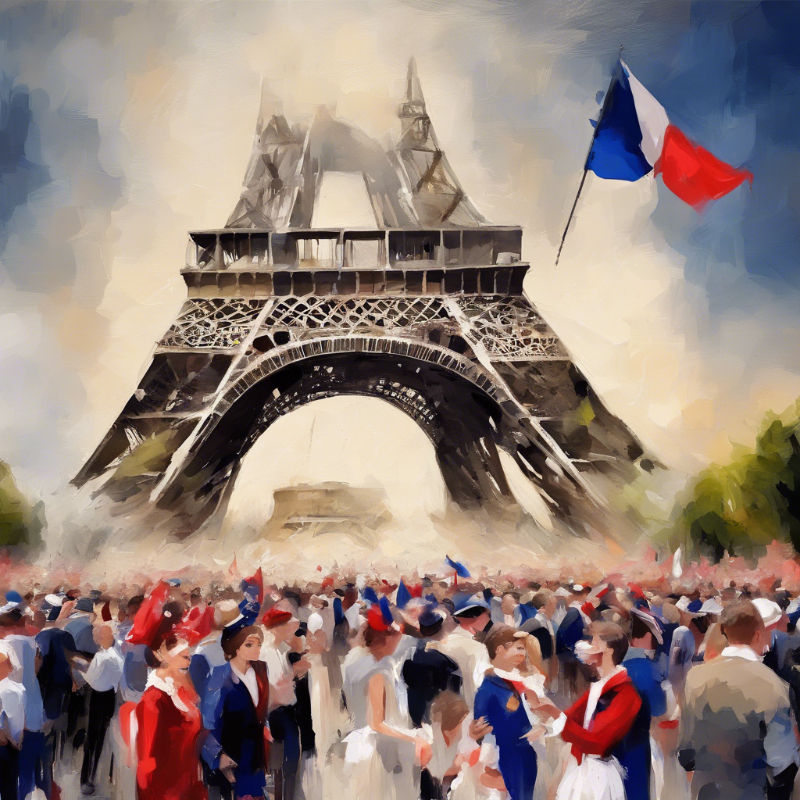
July 14th is the main national holiday in France but unfortunately this year it fell on a Sunday so we'll have to wait another year to enjoy an extra day off work. That aside, you might wonder what are the origins of this day and why do the French acknowledge it each year with a range of cultural and musical events?
What was life like in 1789 in France?
France was led by the monarchy, King Louis XVI, who had absolute power. The people had no parliament to represent them, they had no rights. 80% of the population were peasants who either worked their own land or in the majority of cases, that of a landowner to whom they paid 50% of their yearly yield in rent. On top of this they also paid taxes to the state and to the church!
The clergy and prosperous elite or bourgeoisie on the other hand, were the privileged minority who didn't pay any tax. Corruption was rife, ensuring that the rich became richer and the poor poorer, as depicted in this image of a clergyman and a nobleman literally being carried on the back of a peasant. The text reads "Hope that the game will end soon".

France was also in the midst of an economic crisis as it notched up a huge national debt due to it's involvement in the seven years war (1756-1763) between England, Spain and France in North America and the American war of Independence. So, in the lead up to 1789, rents and prices rose by 50% whilst wages only went up by 25%. To exacerbate the situation, a severe winter in 1788 meant that there was a poor crop yield. The result was famine and widespread starvation amongst a growing population. By 1789 France was broke. The nobility refused to pay more taxes, and the peasants simply couldn't. It's hardly surprising that the people had had enough. They wanted change, they wanted freedom and they wanted to have rights.
Calls for ‘Liberté! Egalité! Fraternité!’ led to the removal of the French upper classes and meant that each person would have the fundamental right to freedom and be treated equally. The impact of the revolution across France was huge; the monarchy fell, the middle class rose up and so too did nationalism.
Claude Monet's painting of Rue Montorgueil in Paris is sometimes thought to show the celebrations of 14th July because of it's vibrant colours and depiction of joyful festivities in a Parisian street when in fact it was painted as a result of a festival declared by the government held on 30th June 1878 to celebrate "peace and work".

Why the Bastille?
The Bastille was a military fortress containing ammunition and weapons and it was a prison where political prisoners and civilians were kept, some on direct orders of King Louis XVI without appeal. It was symbolic of the monarchy's tyranny and abuse of power.
On July 14th, the Bastille became surrounded by a mob of people who had already plunged weapons from 'Les Invalides'. The Bastille fell easily when troops protecting the Bastille were shown to be sympathetic to the people's plight.
Just so you know, the French Revolution didn’t end in 1789. It actually lasted for another six years, with further violence and bloodshed and it wasn't until 22 September 1792 that the National Convention was established. This formally proclaimed the abolition of the monarchy and established the French Republic.
On 21st January 1793 King Louis XVI was executed. Nine months later his wife, Marie Antonette was convicted of treason and executed on 16 October 1793.
It was only in 1880, that July 14th was designated the French National Day.
Bastille Day Celebrations in Annecy
In Annecy, Bastille Day celebrations usually start with some kind of formal military parade on the Pâquier, in front of the Prefecture, followed by games and activities for children in the Park d'Europe, live music and later on in the evening, fireworks over the lake.
It's a day when people come into Annecy to wander around the old town, stroll along the lakeside, let the children play out or sit with a picnic and a bottle, waiting for the fireworks to begin. In previous years children could play with large building blocks, do bungee trampolining, watch a play, you name it. The flip side was huge crowds and long queues.
This year's festivities were less ostentatious. I believe that the town hall wanted to deter large gatherings in the centre of Annecy due to security risks and limited policing as some of the police force has had to go to Paris to help with the Olympic Games. For this reason, the games in the Parc d'Europe for the children were low key, the idea being that activities would also be held in each of the suburbs to deter too many people gathering in one area.
A children's shooting game. Quirky puzzels. 'Old school' table football. Child size 'Connect 4' Wooden puzzles for little ones Board games with mums & dads.
Later on there is dancing and live music (my favourite part of the day) and the evening finishes with a firework display.
Line dancing anyone? Or maybe a bit of tango Or an Irish jig?
All in all a lovely day of celebrations. I'm already looking forward to next years extra day off!
That's all for now. Should you have any questions or comments, feel free to email me at info@simplyannecy.
À bientôt......


Comments